
What can ecologists learn from astrophysicists, and what might the two fields achieve together?
That’s the question behind the Astro-Ecology Workshop, held at UQ’s Moreton Bay Research Station (MBRS) on Minjerribah this month. Supported by funding from the Centre for Biodiversity and Conservation Science (CBCS) Small Grant Scheme, the workshop brought together higher degree research (HDR) students from ecology and astrophysics to share research, discover common ground and explore opportunities for future collaboration.
Organised by Nidhi Sajit Menon, a PhD student in the Marine Spatial Ecology Lab, the workshop welcomed 23 participants from UQ, QUT and UniSQ. The group even included a visiting astrophysics student from Germany’s Max Planck Institute for Solar System Research. Nidhi also thanks Hugh McDougall, a final-year astrophysics PhD student at UQ, for helping bring together some of the connections that made the workshop possible.
The workshop combined research presentations and discussions with opportunities for participants to connect informally and explore shared interests. A panel featuring ecology postdoctoral researchers Dr Keaghan Yaxley and Dr Alice Twomey, who have collaborated with astrophysicists, gave students insights into interdisciplinary research and advice on building collaborations across fields. Participants then continued the conversation in smaller networking groups, discussing their research skills and potential common ground.
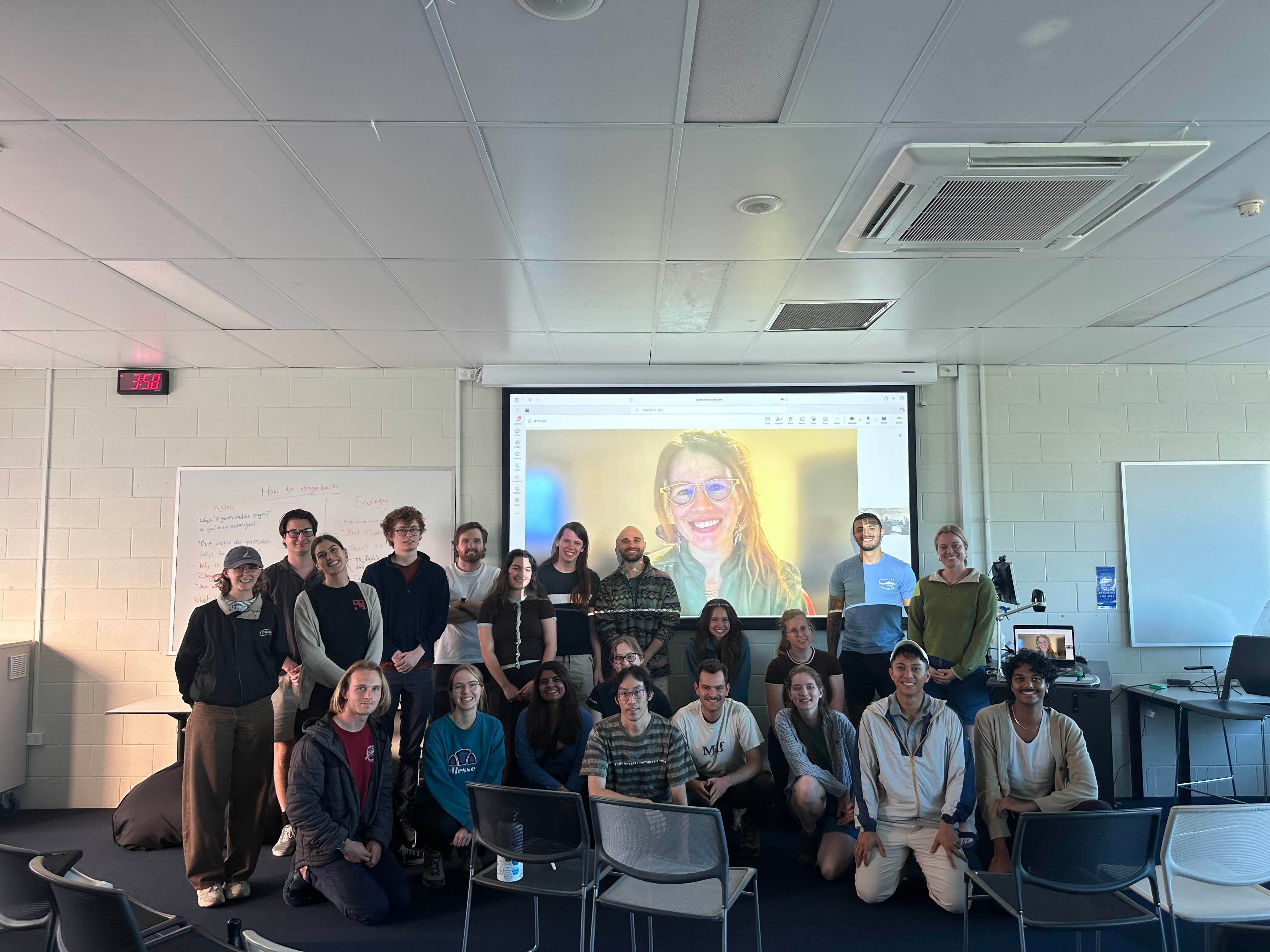
“I had such a mars-vellous time bridging the space between our two fields! I will saturn-ly be maintaining these connections long into the future,” Nidhi says. Reflecting on the experience, she says the engagement between students from different disciplines was a highlight.
“The student presentations were great, with everyone engaging with each other's content across disciplines, which was really nice to see. Then we had a panel session with Keaghan and Alice, ecology postdocs who have collaborated with astrophysicists on interdisciplinary research. They talked a little bit about their journeys, and the participants were very keen to ask them for advice. Following this, we had a networking session, with participants discussing their research skills in smaller groups.
For the more fun aspects - our wildlife spotting was immediately successful, with koalas and birds right near the station. Right after that was dinner and trivia, and then the much-anticipated stargazing and astrophotography. It was a really good time.”
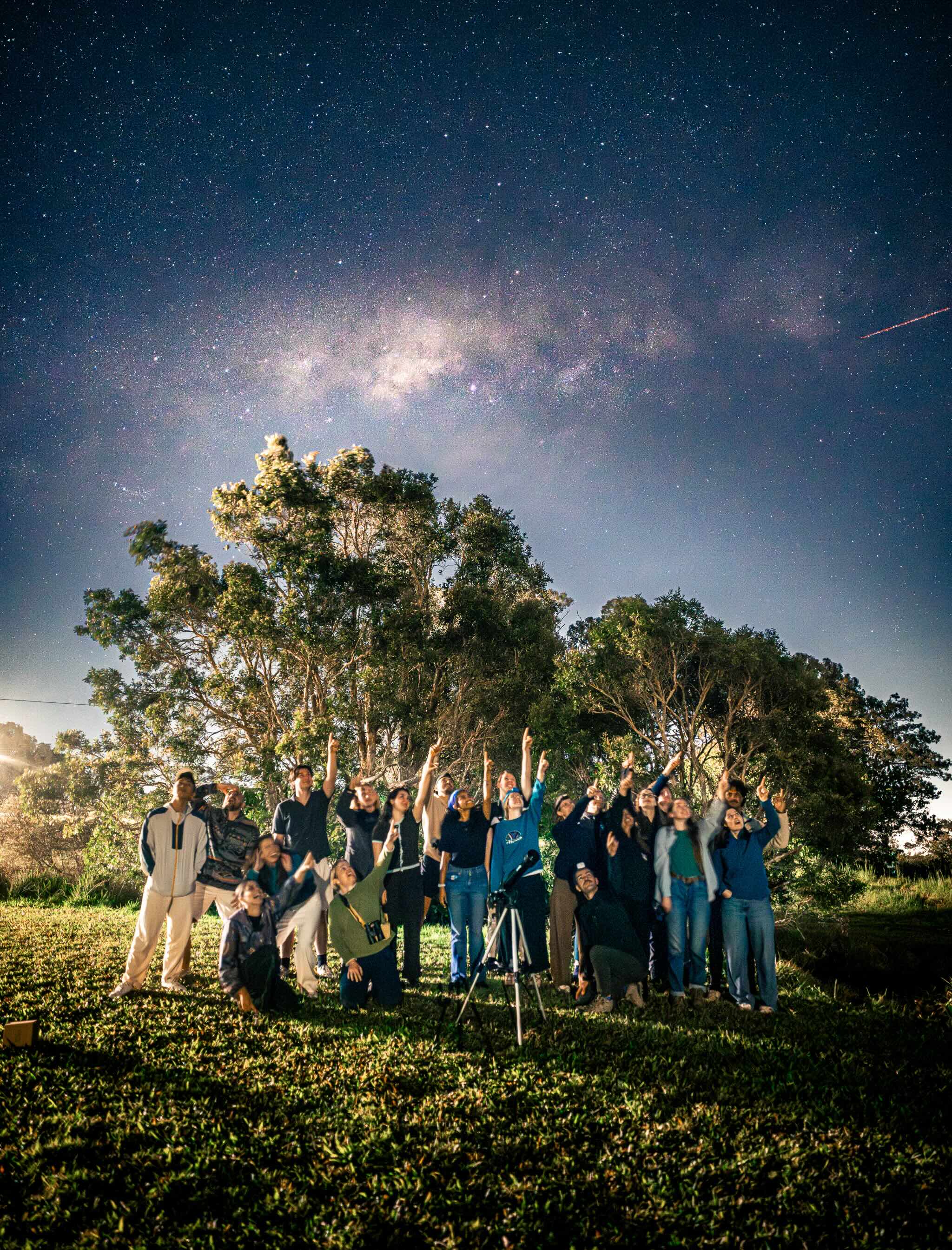
Beyond the formal program, wildlife spotting, trivia and stargazing gave participants a chance to connect over their shared curiosity about the natural world and the universe. With koalas and birds spotted near the research station and a telescope offering views of Saturn, the activities provided a memorable way to bring the two disciplines together.
For Nidhi, the workshop was ultimately about creating connections that could extend well beyond the weekend.
“Overall, I would say it was a great opportunity to meet people from a completely different discipline and learn about their research, while potentially trying to find bridges between the two. I hope it has set the ball rolling for young scientists to think about collaborations across fields and connecting with other scientists who may be along similar journeys.”
