Seagrass is one of the most valuable and biodiverse habitats in the world, supporting biodiversity via habitat provision and food supply, and providing humans with carbon storage, improved water quality and coastal protection against erosion. Yet, such seagrass meadows are often critically under protected, with almost 30% of known seagrass area across the globe being lost due to human activities. They are additionally the least mapped and most poorly understood vegetated submerged coastal ecosystems.
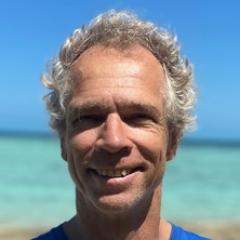
In a bid to address this, a global team of researchers, including CBCS’s Associate Professor Chris Roelfsema, have created the first complete map of the world’s seagrass for clear shallow water, identifying important areas of seagrass as well as vulnerable regions. This paper, led by Arizona State University PhD student Jianghai Peng, recently published in Nature, can play a major role in supporting seagrass conservation and climate policy.
The team identified 148,506 km2 of seagrass globally in clear shallow water, including 5,961 km2 of intertidal and 142,545 km2 of subtidal areas, but found that only 21% of seagrass areas are located within marine-protected areas. They also found that over the 4 years of the study, 5,969 km2 (4%) of seagrass was lost, and an additional 6,221 km2 (4.2%) was degraded from dense to sparse cover in tropical regions.
“Mapping seagrass is challenged significantly due to submerged nature making it harder to map then terrestrial vegetation. Seagrass that is in deep water, turbid water and has low coverage is hard to differentiate or not able to with drone, plane or satellite-based imagery,” says Chris. “But it’s a great step forward to better understand seagrass ecosystem on large global scale.”
Chris explains that the next steps include “1) focus on mapping abundance and species composition at regional to global scales in collaboration with local partners providing detailed up to date field data and 2) Modelling the remaining seagrass we cannot see as they are too deep, turbid or little.”