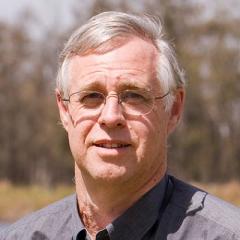
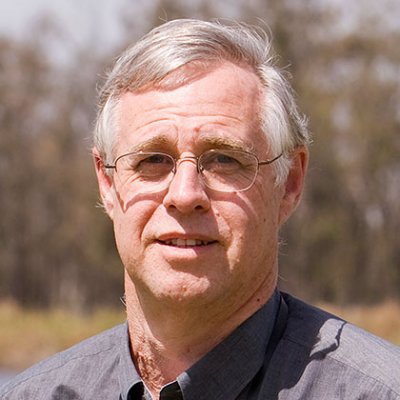
CBCS's Emeritus Professor Marc Hockings, from the School of the Environment and a University of Queensland alum, has been appointed an Officer of the Order of Australia (AO) for distinguished service to environmental conservation, and to the development of protected area management effectiveness evaluations.
Reflecting on a career spanning decades of global impact, his work has helped shift the conservation agenda from a focus on how much land is protected to how well it is managed. Through his leadership, including pioneering the IUCN Green List of Protected and Conserved Areas, Professor Hockings has played a central role in shaping how protected area success is defined, measured, and addressed worldwide.
“I am deeply honoured by this award and very aware that it represents the efforts and achievements of many colleagues around the world in highlighting issues of effectiveness in national parks and conservation areas,” Marc says.
From parks to a global research agenda
After completing a Masters of Science (Zoology) at UQ, Marc took a short-term role with the Queensland National Parks and Wildlife Service - one that would ultimately shape his career. “It took me 16 years to leave [Parks]!” he laughs. “I worked in the Parks Service in a variety of roles, and when I came back to university as a lecturer, and was restarting my research career, it struck me that the one thing we weren't very good at in National Parks was knowing whether or not we were being successful. We were busy establishing and managing parks, we were developing management plans in which we said we'd monitor lots of things – but we didn't usually do too much of that monitoring. I decided that developing an approach to assessing success in protected area conservation was a big gap I could focus my research on”.
This realisation would become the foundation of his research: how to measure whether nature conservation efforts are actually working.
Shifting the focus: from area to quality
At the time, conservation success was largely defined by scale - how much land was protected - rather than how effectively it was managed and what outcomes it delivered for nature.
Marc recalls that around that time, people were just beginning to ask questions about the quality of conservation. “International targets for conservation were all about area – the number of hectares declared as protected. People were setting targets like 12% of the world in protected areas and so on. But there was little talk about quality”.
Whilst things have changed, with more targets considering quality, Marc notes that an imbalance still exists. “Target 11 under the Aichi Biodiversity Targets and Target 3 under the current Kunming Montreal biodiversity framework lead with targets for area - now 30% by 2030 - but they also talk about quality. The unfortunate thing, is that governments in particular still put most of the emphasis on area. Have we got 30% - not whether its delivering conservation outcomes. There's a lot of research, much of it done through CBCS, that points to problems with that. Hopefully the Order of Australia Award will add to the focus on quality”.
Measuring what matters
Central to Marc's work has been ensuring that conservation science translates into real-world outcomes. When he returned to academia, he focused on producing research that would be directly useful to park managers and decision-makers.
“One of the measures of impact is publishing in good journals and getting lots of citations – but that doesn't necessarily translate into changing management practices on the ground. Other measures of impact are really important; is the research being used, and is it changing what happens in the world? I think one of the reasons I got this award is because of the way in which those approaches to evaluating effectiveness that we developed, working with others in the IUCN World Commission on Protected Areas, have been picked up and applied in close to 150 countries, in tens of thousands of sites around the world, and written into international policy. I'm sure that happened not just because of journal papers but because of engagement and interaction with managers. I think that's really important that universities are starting to pay attention to those other measures of impact”.
Recognition and global impact
For Marc, the Order of Australia recognises not just individual achievement, but a collective global effort to improve conservation practice by elevating the focus on quality in conservation outcomes.
“It's a recognition of the impact that we have had – impact that came from working through those volunteer networks in IUCN If it can bring greater focus to these issues of quality, then that's good. Much of the research in CBCS has real-world impact, and UQ brings together one of the largest communities of people committed to making a difference on the ground. For a group like CBCS, what really counts is not just generating ideas, but seeing those ideas applied to improve conservation in the real world”.
Looking ahead: advice for future conservation leaders
A defining part of Marc’s legacy is the impact of his students, many of whom are now helping to shape conservation efforts globally. He highlights the importance of considering how you’re engaging and who you are engaging with.
One of the things that really gives me hope is seeing where the students that I've been involved with have ended up and what they're doing now. They are really kicking goals around the world in terms of conservation, involved in groups like IUCN, Conservation NGOs, the International Ranger Federation, or on the academic side developing influential research programs. I think that is my advice: if you want to have impact, think about how you engage and connect with the wider conservation community - these groups are looking for and value the input of young professionals. The opportunities are there, the encouragement is there, and if people pick that up, it's a great start to an impactful career”.