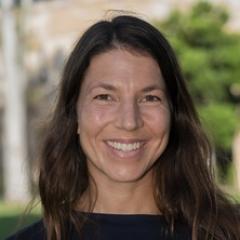
This year, the Centre for Biodiversity and Conservation Science (CBCS) welcomes a new leadership team, including its Director and Management Committee, who will help guide the Centre’s strategic direction and research priorities.
Our Management Committee is the heart of CBCS – it inspires and executes most all of the things that we do. It consists of a passionate group of conservation scientists at UQ working across four strategic areas: Research, Engagement (external) & Policy, Advancement, and Community. We work in small teams, consisting of a deputy director, early career researcher, and a PhD student, to ensure that multiple career stages and perspectives are captured. For the first time ever, we have an undergraduate representative on the committee, to help bridge the gap between the undergraduate conservation community and CBCS. Every month, we all gather to communicate and collaborate as a team. Equity, Diversity and Inclusion is at the heart of each of these positions, mainstreamed into everything we do to ensure that the CBCS community continues to thrive and provide an important home to those working in biodiversity and conservation science across UQ.

Associate Professor Carissa Klein
Director, Centre for Biodiversity and Conservation Science
Carissa Klein is an ARC Future Fellow at The University of Queensland. She is a conservation scientist and leads a research group called The Ocean Conservation Team, a group of students and post-doctoral researchers focused on developing science to support marine and coastal conservation. Her team's research is motivated by real-world conservation management and policy problems and is done in partnership with numerous non-government organisations, government departments, and foundations around the world. Her research group specialise in integrating social, economic, and ecological information to develop solutions that improve outcomes for nature and people. Their generally falls into three themes: land-sea conservation planning, marine spatial planning (ocean zoning), and sustainable seafood.

Dr Matthew Holden – School of Maths and Physics
Deputy Director – Community
Dr. Matthew Holden is an applied mathematician using modelling to improve environmental outcomes. Mathematical tools unify his research across several diverse topics in biodiversity conservation, theoretical ecology, fisheries, and other branches of natural resource management. He is especially interested in how we improve the well-being of human populations at least cost to biodiversity.
Dr. Holden currently serves as the President of the Resource Modelling Association, an international society of economists, mathematicians, and environmental scientists unified via their passion for modelling and other quantitative methods to solve the world's hardest natural resource management problems.
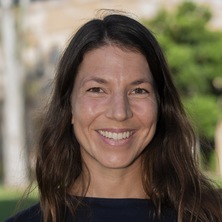
Dr Wilma J. Blaser Hart
Deputy Director - Research
My research addresses these critical questions by quantifying the trade-offs between agricultural production, climate change, and biodiversity in tropical agricultural landscapes. A key focus of my work is agroforestry—the strategic integration of trees into cultivated lands. While agroforests are not a one-size-fits-all solution, my research shows that agroforestry, when informed by a quantitative understanding of these trade-offs, can improve biodiversity and climate outcomes without compromising agricultural productivity.
Through fieldwork and conservation planning, and in collaboration with my wonderful colleagues at the Centre for Biodiversity and Conservation Science (CBCS), I aim to understand how agricultural landscapes can be optimized across large geographic areas, to best meet conflicting goals and improve biodiversity outcomes. The goal of this work is to improve sustainability outcomes across West Africa, where tropical forests have been rapidly converted in order to produce 60% of the world's cocoa.

Dr April Reside – School of Agriculture and Food Sustainability and School of the Environment
Deputy Director - Engagement and Policy
Dr Reside's research encompasses ecology, conservation, and policy; investigating refuges and refugia; and recovery actions and their costs for Australia's threatened species. April also works on conservation of woodland bird communities, the impact of climate change on biodiversity, and strategies for climate change adaptation. This work has involved applying conservation planning frameworks to identify spatial priorities for climate change adaptation for biodiversity and carbon sequestration.

Dr Lily Bentley
Deputy Director – Advancement
Lily is a movement ecologist and Postdoctoral Research Fellow. She is interested in how and where highly mobile predators travel, what their journeys can teach us about their evolutionary histories, and how to translate research findings into effective conservation policies. She is currently working on using animal tracking data and network models to understand migratory connectivity in the oceans
ECR representatives
Dr Elize Ng
ECR Representative - Research
Elize has a broad interested in avian biology and conservation. Here at UQ, as an affiliated researcher with the Centre for Biodiversity and Conservation Science, she is developing a comprehensive conservation action database for shorebirds along the East Asian-Australasian Flyway to support conservation strategies and inform effective management for these migratory species.
With a background in population and evolutionary genomics, Elize's research has explored how major drivers such as the captive trade, habitat fragmentation, and climate change shape avian species across diverse ecosystems, from the tropical forests of Southeast Asia to the icy landscapes of Antarctica. Through her current research in applied conservation, she leverages her genomic expertise to develop more targeted strategies for biodiversity preservation. Her aim is to bridge the gap between foundational genomic research and practical conservation strategies, addressing critical challenges in wildlife management and ecosystem sustainability.
Dr Tania Kenyon
ECR Representative – Community
My research focuses on reef recovery following disturbances, looking at the interplay between biological, ecological and physical drivers of recovery. After diving in the Galapagos, my interest in the marine environment was piqued, and I began a PhD in reef recovery dynamics in 2016, receiving my doctorate in 2021. My work is interdisciplinary, incorporating aspects of marine geology and hydrodynamics to the core focus of marine ecology. I have investigated how coral recruitment is affected by material legacies (rubble) on coral reefs, how these legacies are affected by the physical environment (mobilisation thresholds) and how marine invertebrates consolidate this material, contributing to reef recovery. My research focuses largely on natural recovery potential, but I also investigate the efficacy of reef restoration techniques in the marine environment, such as mesh netting and metal structures, and where they can speed recovery. My work has spanned multiple regions, including the Maldives, the Great Barrier Reef, and the Coral Triangle.
Dr Tina Skinner
ECR Representative – Community
Quantitative marine ecologist with over a decade of international experience delivering applied science and managing multi-partner projects to advance marine conservation and ecosystem management. Skilled in leading cross-sector collaborations, translating complex ecological and biodiversity data into management outcomes, and aligning conservation outcomes with cultural, social, and economic priorities. Experienced working with governments, NGOs, research institutions, Indigenous peoples, and local communities across the Pacific, Caribbean, and Australia. Passionate about connecting science with decision-making and driving large-scale, lasting impact for people and nature.
Dr Valerio Tettamanti
ECR Representative – Engagement and Policy
Valerio's current research is focused on coastal conservation and restoration. His work supports the Nature Repair Market (NRM) established by the Department of Climate Change, Energy, Environment, and Water (DCCEEW) and encompasses facilitating expert collaboration, developing best-practice guidelines for biodiversity assessment, and informing evidence-based policy for coastal restoration. He is also involved in the development of methods to assess biodiversity gains through time on oyster reef restoration projects using environmental DNA.
Originally from Ticino, an Italian-speaking region of Switzerland, Valerio had formerly a background in neuroengineering and molecular biology. He completed his BSc in Biology at the University of Lausanne (UNIL), Switzerland, and his MSc in Biology (with a focus on neuroscience) at the Swiss Federal Institute of Technology in Zurich (ETHZ), Switzerland. Despite growing up in the middle of the Alps, he has always had a fascination with marine life, which brought him to the University of Queensland to undertake his Master’s thesis as part of the Sensory Neurobiology group, studying the visual system of surgeonfish. Valerio completed his PhD as part of the Marine Sensory Ecology Lab at the University of Queensland, where he researched the development of colour vision and colouration in a coral reef fish family, applying cutting-edge technology such as CRISPR-Cas9 and single cell RNA sequencing, while also using behaviour paradigms, calibrated photography, phylogenetic comparative methods and bioinformatics.
Dr Keaghan Yaxley
ECR Representative - Advancement
I am a postdoctoral fellow at the University of Queensland working on a project co-supervised with Prof Diana Fisher. My background is in macroevolution and macroecology, phylogenetic inference and comparative methods and incorporating evolutionary history into conservation planning. I completed my PhD at the University of Cambridge in 2023 before working as a researcher at the Australian National University and as a quantitative ecologist in local government. In my current role I will be using comparative methods and quantitative modelling to investigate the evolutionary drivers of semelparity in animals.
Dr Luz Pascal
ECR Representative – Research
Luz is a mathematician, and a Postdoctoral Research Fellow at The University of Queensland, School of Mathematics and Physics, advised by Dr Matthew Holden. Luz is interested in decision-science, aiming to answer a pressing question: "How can we make better decisions for biodiversity conservation?". Luz' expertise lies in optimization, sequential decision-making, adaptive management, AI and value of information. Prior to this, Luz undertook her PhD at the Queensland University of Technology, designing optimization approaches for biodiversity conservation using new technologies.
HDR representatives
Skye Anderson
HDR Representative
Skye Anderson completed a Bachelor of Arts in Zoology/Statistics and a first-class Honours in Ecology at the University of Otago. Living in New Zealand, Skye was involved in many conservation projects including working with the department of conservation in Nelson Lakes National Park, stream health surveys in high country areas of central Otago, and yellow-eyed penguin monitoring in Dunedin. Her passion for studying wildlife ecology continued to grow when she moved to Hawaii and worked as a field biologist for four years. Skye worked for the Maui nui seabird recovery project, whose aim is to locate, protect and enhance seabird colonies on Maui.
In January 2024 Skye moved to Brisbane to start her PhD at The University of Queensland under the supervision of Dr Matthew Luskin and Professor Richard Fuller. Her research is focussed on the ecology and conservation of Australian tropical forest wildlife. She is particularly interested in utilising large camera trap datasets and statistical modelling to investigate dynamics of species assemblage changes resulting from anthropogenic pressures.
Justine Ohlrich
HDR Representative
Justine is a PhD student at The University of Queensland, supervised by Dr Simon Hart, Dr Gilad Bino (UNSW) and Dr Tamielle Brunt (Wildlife Queensland). Her work focuses on freshwater ecosystems, with platypus as a model species. Prior to her PhD, she completed a Bachelor of Science with first class Honours. Her honours project was identifying best practice methods for invasive rat control at the Port of Brisbane, through extensive camera trapping and snaptrapping.
Undergrad Representative
Peleg Kark (Honours) – School of Economics
Undergraduate Representative
Peleg is interested in tackling complex environmental challenges and bridging the gap between economic policy and biodiversity conservation. He has a dual degree in Economics and Science, with a major in Applied Mathematics, and is currently doing his Honours in Economics. He enjoys using mathematical modelling and programming tools in his work. His research explores environmental market designs, with Professors Ian MacKenzie, Lana Friesen, and John Quiggin as his advisors.
As part of Peleg’s passion for the natural world, he serves as a global Ambassador for iNaturalist and a Student Ambassador for the Nature Positive Universities program. Having travelled around the world and speaking three languages, he aims to bring cross-disciplinary perspectives to his research and teaching. You’ll often find him outside, running along the river, organising a game of ultimate frisbee, or photographing wildlife.